Podcast Episode 2: Sirens on the USA Network!

Podcast Episode 2: Sirens on the USA Network!

May 7, 2014

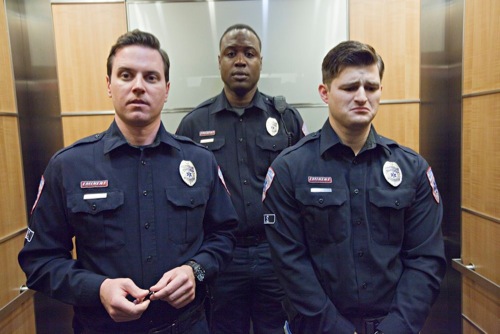
While the initial plan was to post my podcasts on Mondays, this one was too good to pass up on posting a little early.  In this episode, I talk with Kevin Bigley and Kevin Daniels who play Brian and Hank respectively on USA’s new comedy series Sirens.  I have been a supporter of this project from the start.  Personally, I think it is hilarious.  If you have not watched it yet, you really need to. I had a great time talking to both Kevin Bigley and Kevin Daniels.  Hopefully you enjoy listening to the podcast as much as I enjoyed recording it! To download the podcast, click this link!  Otherwise, use the player...

Podcast Episode 1: Where Are We Headed?

In the first episode of my new podcast, EMS in the New Decade, we talk about the direction the show is set to take, and learn a bit more about who I am, and where I got my start. To download the podcast, click this link!  Otherwise, use the player...

When Dead Is Not Dead

The news story that hit the internet last week about the woman who was “pronounced” by the paramedic who was later discovered to be alive is nothing new.  We have seen this type of thing before.  Chances are, if you ask me, probably just about every case of this has hit the media at some level.  If you ask me though this is not an EMS problem.  This is a personal problem driven by the laziness of a provider. In fact, one article mentions that this exact same medic had an issue a little over a year ago when he flew two patients that probably did not need to be flown, and should not have been flown.  I vaguely remember that story. The problem with this entire situation though is that what will most likely come out of it will be some policy change either at the state level or medical director level, and some fear within the system that “this might be missed again.”  This is not a systemic issue.  It’s not a state issue.  Its a provider issue.  And more importantly, it is one that should never happen.  The only thing that will prevent instances like this is a thorough assessment by a trained medical professional. Every field pronouncement protocol should contain a few core components.  For example, obvious signs of death.  Lividity, rigor mortis, and body temperature.  Or some injury that is incompatible with life; a decapitation, or massive evisceration, cranial evacuation.  These are the things that should be obvious to us when we assess a patient, and we do need to assess these patients.  We need to touch them, and inspect them, and make sure that we are making the right call, even if we are on a crime scene.  These things must be done. The other component that should be part of every field pronouncement protocol is the acquisition of an ECG that shows three leads of asystole for a predetermined amount of time.  The best way for any paramedic to check this is not to get a “quick strip” but instead to do something like a “10-20-30” evaluation of the patient’s ECG. What I mean by a 10-20-30...

EMS in the New Decade: The Podcast!

EMS in the New Decade: The Podcast!

Apr 30, 2014

Yes, you read that title right: The Podcast.  The time has come for me to finally do what I have wanted to do for a couple years now.  On Monday May 5, I will release the first episode of my podcast carrying the same title as this blog.  This is something that I have wanted to do for a long, long time, and have been asked to do by a few people but I never really felt that I had the time. A lot of the roadblocks that I had keeping me from doing this are not there anymore, and it is time for me to take the plunge.  Monday’s show will be an overview of what to expect from the episodes to come.  Shows will be posted weekly on Monday mornings at 10:30am EST, and will be listed along with my other blog posts on the homepage of my blog.  In addition to that, there will be a link in the menu to take you to the index of all of my podcast episodes.  Also, I am currently creating an index of past episodes of other shows that I have been part of.  They will be part of this menu page as well. It feels really good to be back writing at 100%.  The major life change, and employer change took its toll on me for a while.  It is not easy to start over in a new system with new people, new protocols, and new everything.  I was ripped from my comfort zone, and it took me a while to get back close to it.  I’m not there yet, and there’s challenges that I am dealing with every day, but to be back writing is an important part of that for me.  It just seems like the next logical step for me is to get back into podcasting, and even more logical to finally host my own show. I really cannot tell you how excited I am about this.  Thanks to the support of people like Ben Neal, RJ Stine, Random Ward, Natalie Quebodeaux, and of course Kyle David Bates, Chris Montera and Jamie Davis, I am finally going to make it...

I’ve Been Rogue Medic’d!

Right now, I feel like a minor internet celebrity.  I’ve been Rogue Medic’d.  That’s right, Tim Noonan, the Rogue Medic, has read one of my posts and posted a reply to it as one of his entries in his blog.  It all started last week when I shared my post as a comment to something he put up in regards to working a CPR with a LUCAS device and the relation of using epinephrine in cardiac arrests. The entry that I referenced was one that I posted a few months back about organ donation and how while not every ROSC will walk out of a hospital, we might produce the opportunity for organ donation for that patient.  While one life could be lost, others could be saved. Tim makes some excellent points in his reply to my comment.  Obviously, the job of every paramedic and EMT out there when working a cardiac arrest is to save our patient.  We want them to walk out of the hospital.  We want that chance down the road to meet them.  If that is even going to happen, we first need to achieve ROSC. My advocacy for epinephrine revolves around personal feelings based on my experience, I believe that the use of epi in cardiac arrests produces a higher ROSC rate.  More specifically, I feel that the effects of epinephrine produces ROSC in patients that we would not have gotten ROSC in.  I am mainly talking about those asystole patients and patients in an unexplained PEA.  Due to the fact that these people that are saved might not have been brought back otherwise, their long term outlook is poor. This differs from those patients that we encounter in v-fib and v-tach without pulses.  Those patients, again, in my opinion, should not get epinephrine.  The focus there should be solely on high quality CPR.  This part of my opinion is actually supported by studies. It was easy enough for me to find one from 2013 that states that while more trials are needed, detrimental effects post-cardiac arrest were greatest in patients who received epi and were in v-fib or v-tach.  So on that side, I fully support Tim’s repeated...

Challenging Problems with Simple Solutions

In all my years in EMS and my almost 14 as a paramedic I have seen a lot of creative solutions to the problems that we face on a daily basis.  Some have worked and stuck for years.  Others?  Not so much.  There are two all too common issues that I seem to encounter on a week by week (or even shift by shift) basis that have some very logical products on the market that I feel present an excellent solution to an otherwise challenging issue.  Also, I feel the need to mention that neither of these companies solicited me to write reviews of their product.  These reviews are based on my own personal experience. The EP+R Hand-E Hand Hold Device – One of the biggest challenges of any cardiac arrest or even an unresponsive patient that we are required to move on a backboard present is the conundrum of how to keep their arms secured so that responders can assess them and provide treatment.  Some use tape, other try to tuck their hands into their pockets or waist band, or even use a creative tie with a cravat.  The best solution that I have found though is EP+R’s Hand-E device. Back in 2006, one of the paramedics that I worked with in Massachusetts decided to solicit a few companies for demo versions of their hand restraint devices.  There were straps that needed to be wrapped a certain way, and a few solid devices that aimed at keeping a patient’s arms “in” to prevent them from snagging on door jams or ambulance cabinets.  We tried a handful of them and none was as easy to use and effective as the Hand-E.  It’s quite simple to use: after attaching the device to a waist strap of a backboard you put a patient’s wrist in each of the openings and secure it with the rubber strap.  A patient’s  arms remain reasonably flexed to allow the flow of IV fluids to continue while their elbows are kept close enough to the body that moving patients through doorways or taking them out of an ambulance becomes remarkably easier. According to EP+R’s website, the Hand-E retails for around $22....

The Importance of Policy

Friday’s post about the now deleted craigslist letter got me thinking about the need for an in depth set of policies and procedures to help in decision making for everyone involved in an organization.  My boss used to like to say that there were so many grey areas in EMS that writing a set of policies and procedures would be exhausting and quickly rendered invalid.  I could not disagree more. I went from a service that had very loose procedural structure to being handed a three inch D-Ring binder filled with my new department’s P&P’s that outlined everything from the procedure to call out from work to how to properly place the pins on my uniform.  It was clear and concise and I loved it. Despite what they might tell you I feel that EMS providers crave structure.  If you want proof of that look no further than standing orders and protocols.  While a single protocol might not fit the mold for every patient and you might find yourself crossing from protocol to protocol.  You might not start at step one and move to step twenty hitting steps two through nineteen along the way but you at least have a framework to work within.  Policies and procedures need to be viewed with a similar mindset. No situation is perfect, and no solution is going to be 100% correct 100% of the time, but I feel like if a policy gives you the answer 50-75% of the time then it is serving its purpose.  A prime example would be something like “ambulance crews are expected to be available in the hospital within twenty minutes of their arrival.”  Is that 100% achievable?  Of course not.  There are so many outside factors like patient condition, decontamination needs and ER backups that might prevent this but it sets an expectation and a parameter for crews that if their patient is turned over they should be available in that time frame. Failure to set expectations for people leads to freelancing and frustration.  Rules are enforced from supervisor to supervisor and dispatcher to dispatcher with little consistency.  I know that this happens because I was guilty of it.  There were...

Social Media and Dirty Laundry

Late night I was shown a very public reply posted to a very private email circulated by management in a New England ambulance service expressing displeasure with the performance of many of their employees that some have interpreted led to the loss of a 911 contract that they have been given a second chance at.  Although the original email was never posted, the reply made on a craigslist page and signed by an “anonymous employee” called out management for their practices.  I read it, and I cringed. The post itself was flagged for removal within the first eight hours of it being posted online which is fine, because I would not have linked it here as I personally felt it was in poor taste.  While there is a time and place for sharing with the outside what goes on in the inner workings of an organization this was a lot of dirty laundry to hang on the line for everyone to see.  Quite often they are posted too quickly with the thought that “if I let the public know what is going on here things are sure to get better!”  In actuality, all this does is increase the gap between the field and management. As someone who has, in the past, pulled the pin on a grenade and tossed it into the fray, I can testify that actions like this do not help as much as many think that they will.  As my career progressed, I found it easier to write the email or memo and let it sit on the computer for a good couple of hours.  Then, I would come back and take a second look.  More often than not, my opinion would have evolved to an “it’s the same old complaint, it won’t help anyway.  I’ll keep it in my back pocket though.”  The draft would then be saved, and the window closed, as some fights are just not worth it. The anonymous writer of this post clearly was upset, and I doubt that his or her intentions were completely malicious, they should realize that the damage they did might be irreparable.  While it might be fun for some people to...